
Calibrating moisture measuring satellites with a gamma-ray spectrometer
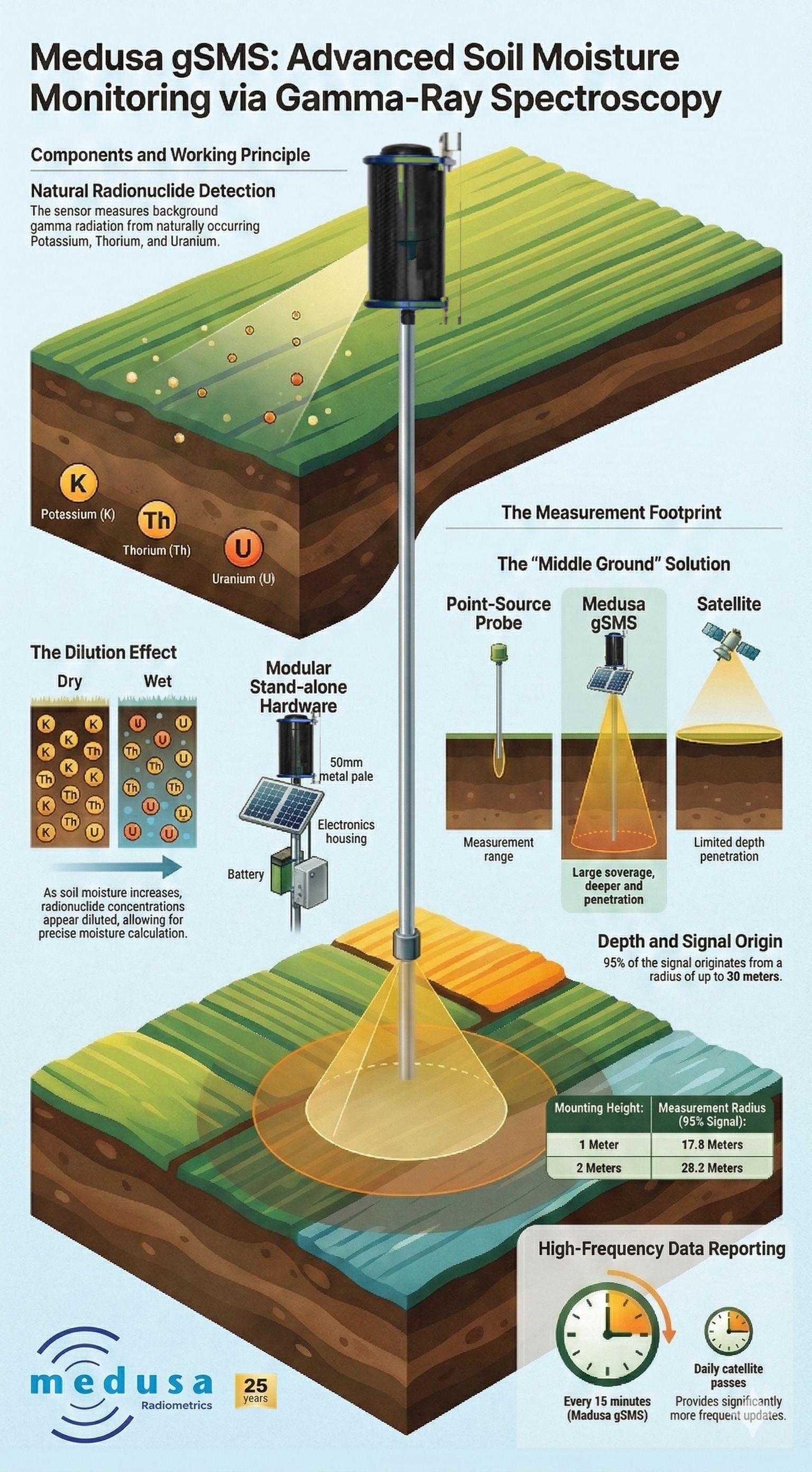
The Medusa gamma Soil Moisture Sensor (gSMS) is a stationary gamma-ray spectrometer that measures the variation in soil moisture content. Gamma-ray spectrometers in geophysical situation measure the naturally occurring radionuclides in the soil.
The measurement system can be used to derive the moisture content periodically for instance for agricultural purposes. But also, as shown in this case study, to calibrate moisture measuring satellites.
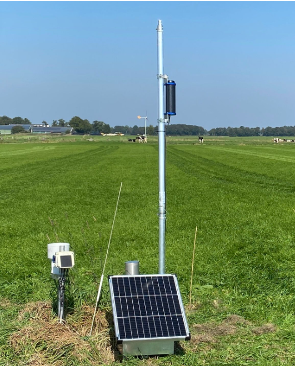
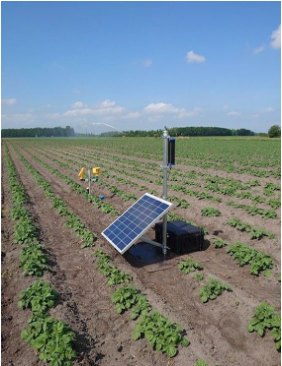
When there is an increase in moisture content in the soil, there is a increase of the density of the soil. However, the amount of naturally occurring radionuclides in that volume stays the same because moisture does not contain radionuclides. This causes dilution in radionuclides concentrations (Bq/kg). Thus, the gSMS captures the relationship between changing soil moisture and radionuclide concentrations in soil.
Case study: Project Boermarke in Vries
A gSMS sensor measured in Vries, alongside a soil moisture measuring satellite. It measures with 15 minutes frequency, while satellite measures once a day.
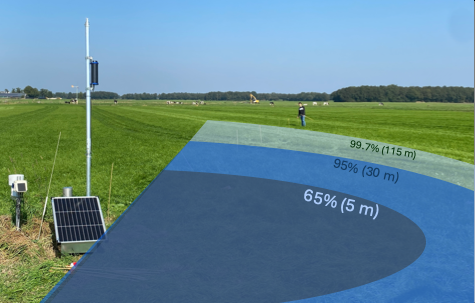
The effective measurement radius of the sensor is about 30 meter, and the depth of 40 to 10 cm. The concentration of 40K measured by the gSMS over a period of 8 months is shown in as a time series below.
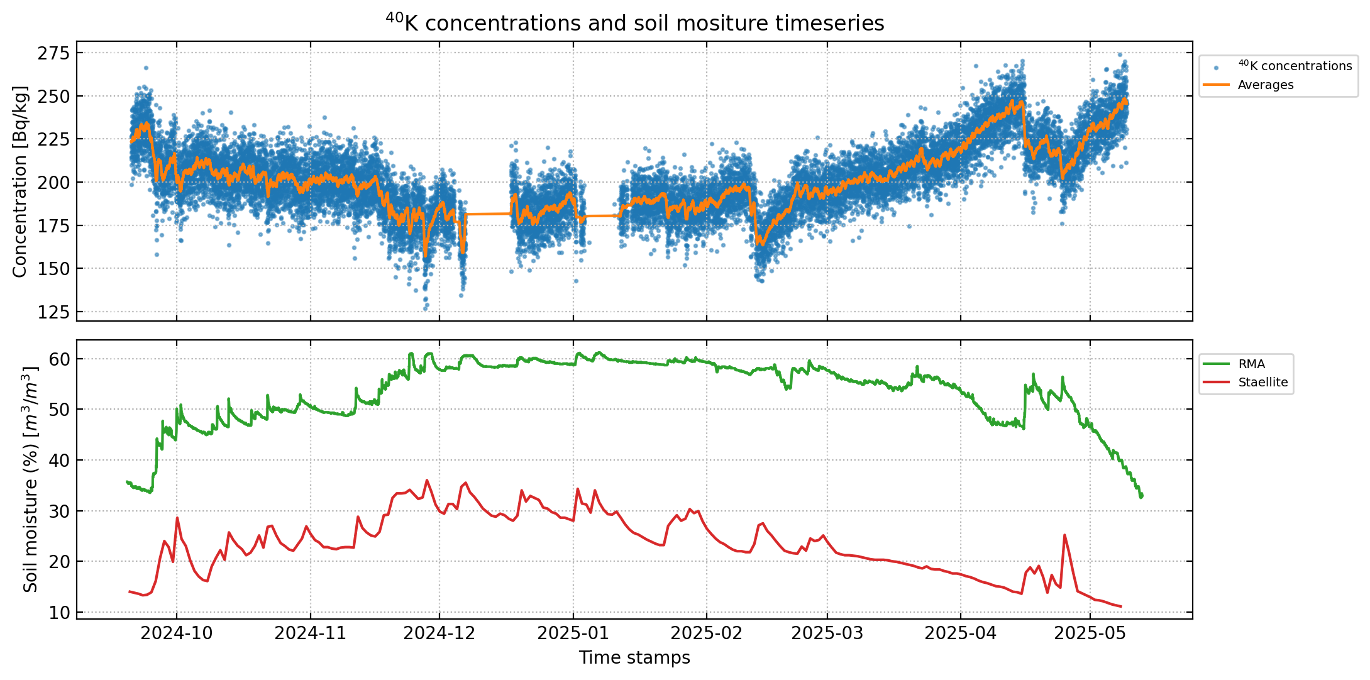
The graph shows:
- gSMS measurement (blue dots and orange line-average)
- Soil moisture measurements from a probe (green line)
- Satellite (red line)
The variation in 40K concentrations reflects the variations in soil moisture, in a reverse manner; the more water content in soil, the lower the radionuclide concentration measured. By calibrating the probe for the site where it is used, these radionuclide concentrations can be converted to absolute moisture content in the soil. The graph below shows the moisture content at the location in Vries after calibration.
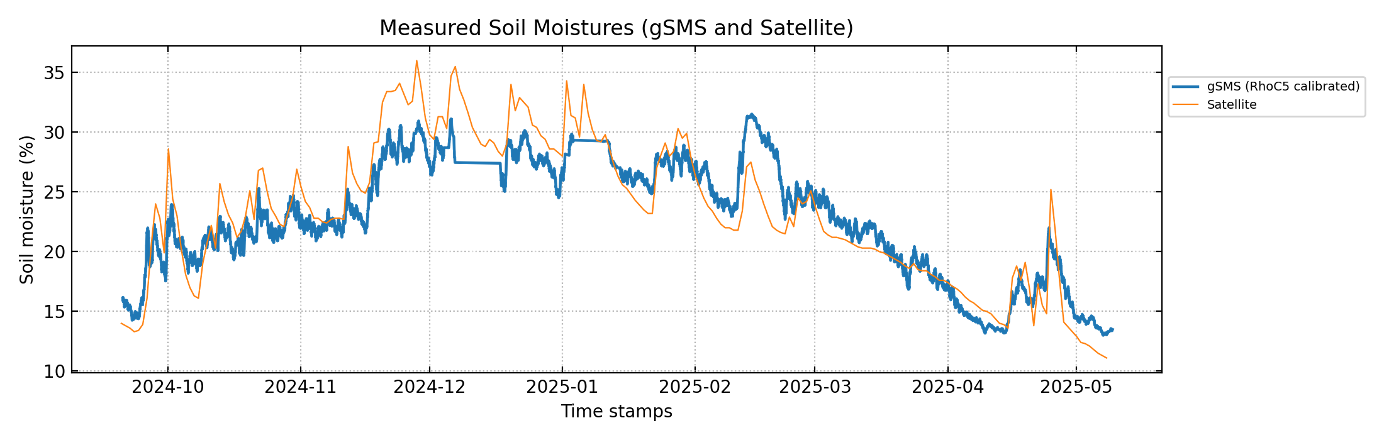
The result of this calibration shows a good match with the soil moisture measurement of the satellite. The differences stem from the measurement frequency of the two systems (gSMS - every 15 minutes, satellite - once a day) and their measurement of different depths of the soil.
Conclusion
A gamma-ray spectrometer can be used to measure soil moisture in an area, with a time resolution of 15 minutes, the sensor can provide absolute moisture readings.
Infographic
More information
More information can be found on page of the Soil moisture application model